How might we take the manual work off an advisor's plate, and give that time back to their clients?
Senior Product Designer
I joined the project at its earliest stage and worked across the product as it evolved.
Then life happened.
Right after the POC and Blueprint, I went on a 12-week parental leave.
When I came back, the product had grown, the team had changed, and a new Lead Product Designer was leading Notetaker. But I was asked by the Head of Design to come back to the product and lead the design of what came next: Meeting Briefing.
That felt pretty good.
Imagine you’re a Wealth Advisor.
You’ve spent years building a portfolio of clients. Your day is a constant balancing act: prospecting, onboarding, managing portfolios, monitoring markets, answering questions and, of course, meeting with clients. That means 4–7 meetings a day, on top of all the preparation that happens behind them.
And the work doesn't happen in one place. Advisors typically move between multiple systems to find portfolio data, client information, reports and documents — often with assistants helping to pull everything together.
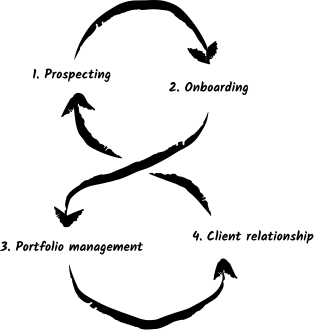
Advisor's proto-journey
As a result, a lot of time spent preparing to advise, rather than actually advising. Industry research estimates that advisors can spend around 36% of their time on meeting preparation, analysis and follow-up, with 12–15 hours a week going toward manual tasks. That's the gap Wealthie was built to close.
Wealthie wasn't simply a product we were asked to build — it came with a much bigger set of business questions.
Part of my job was turning that into something tangible: juggling business goals with what users actually needed, all while figuring out where AI fit into the mix. And with that, Wealthie got structured into three batches of delivery:
01 — The POC
Prove that the opportunity was real.
02 — The Blueprint
Define the ideal experience we wanted to create.
03 — MVP
Build what was feasible, learn from adoption, and gradually move toward our vision proposed in the blueprint.
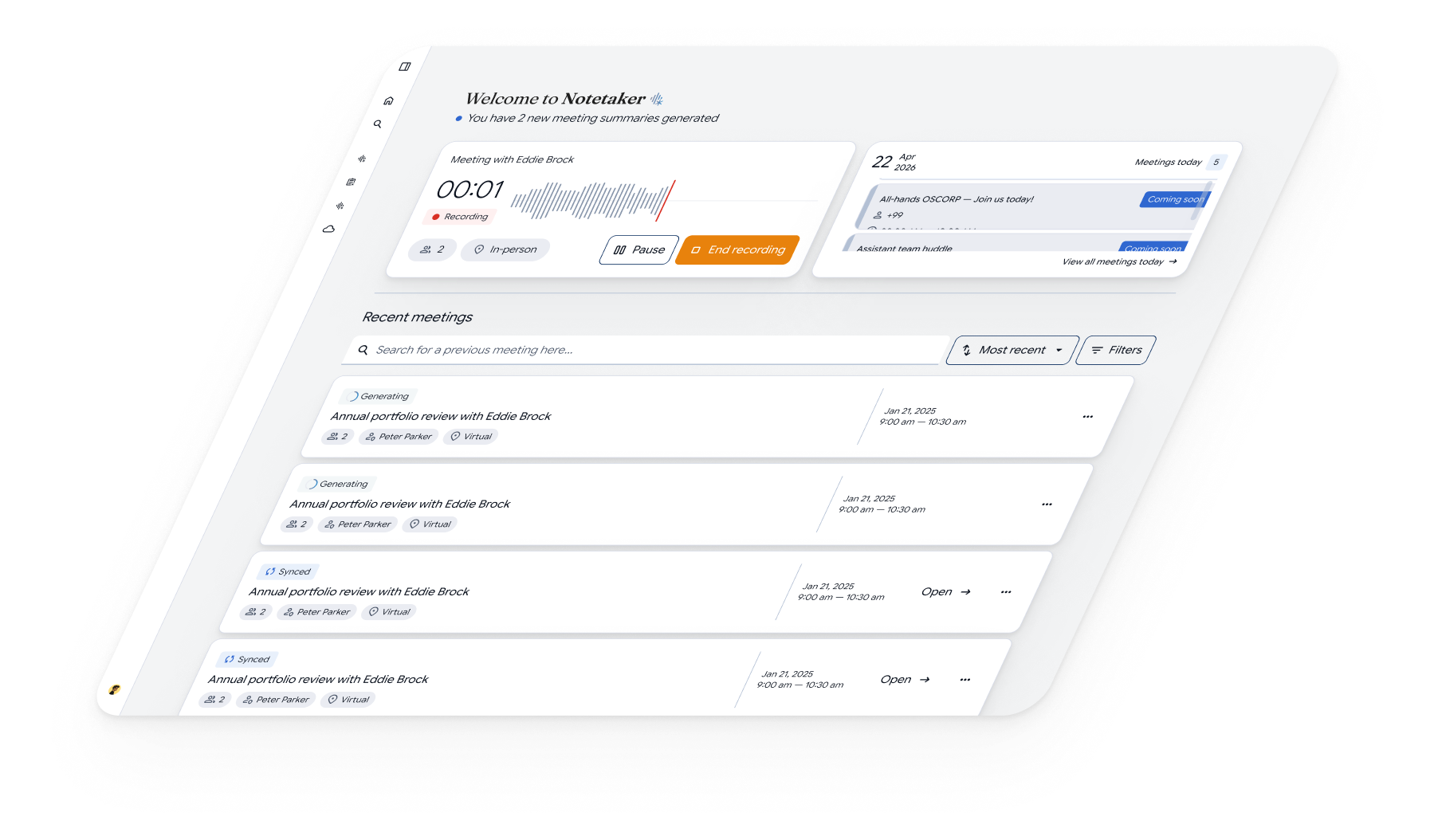
The POC was about building the fastest thing we could ship, but one with real potential behind it: a meeting recorder.
Think of a recorder — the one on your phone, or an actual tape recorder if you're old enough. Except this one would take a big task off advisors' and assistants' plates: no more taking notes, no more piecing together everything that got discussed in at least an hour with a client and their household.
Even better, the idea was for all of it to come out already formatted for Salesforce, one of their main tools. Hours of manual work, turned into a few minutes with the tool.

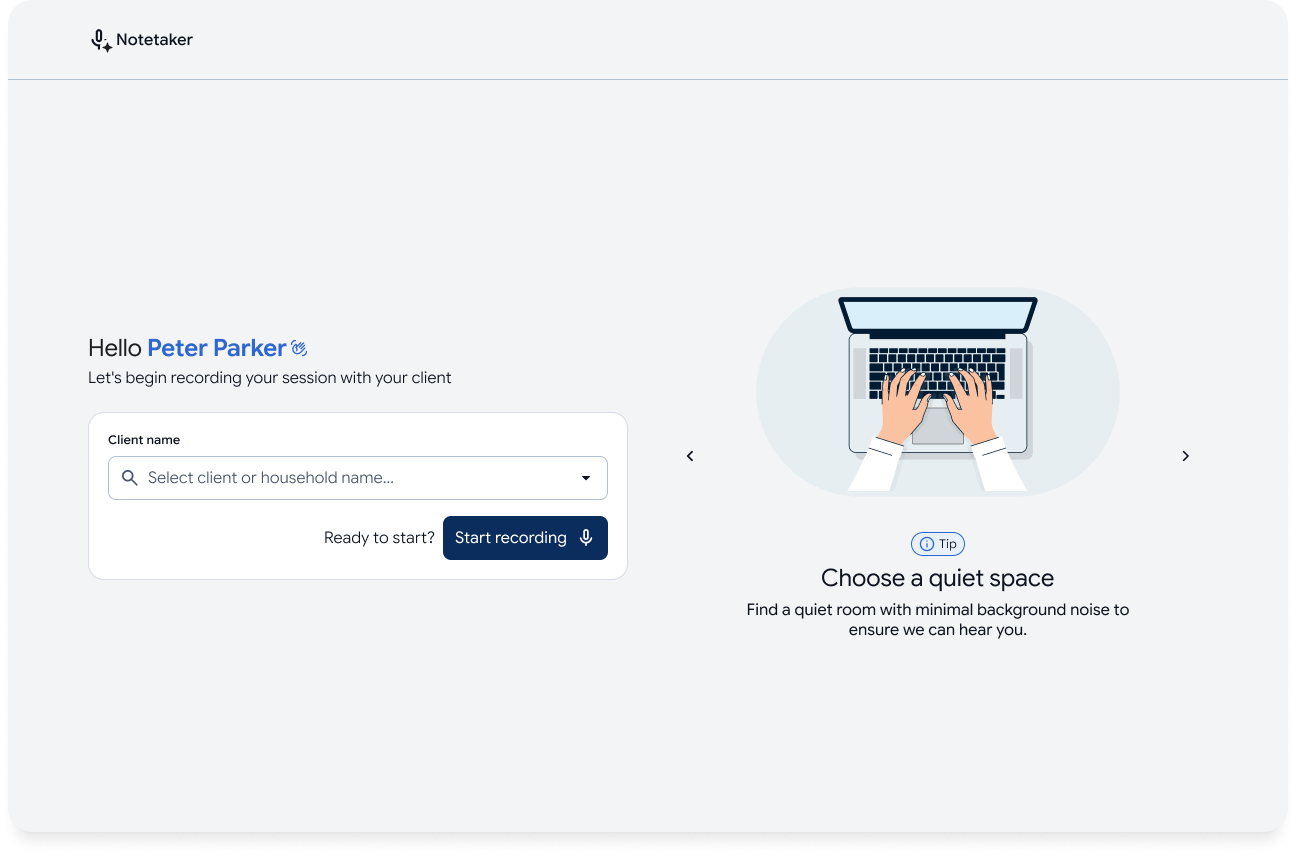
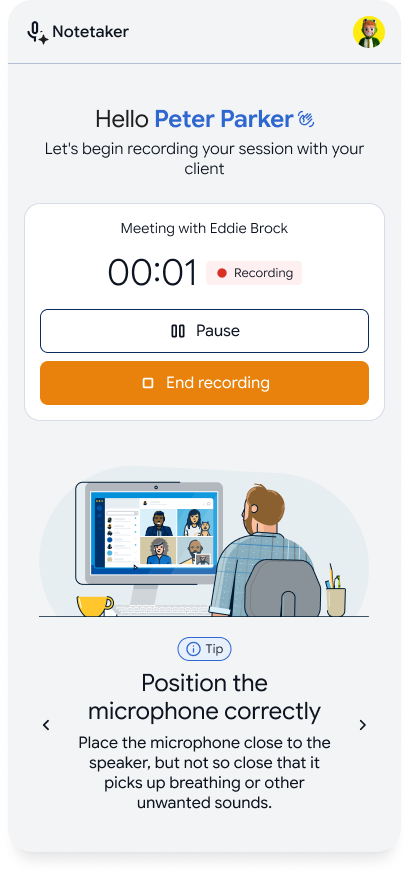
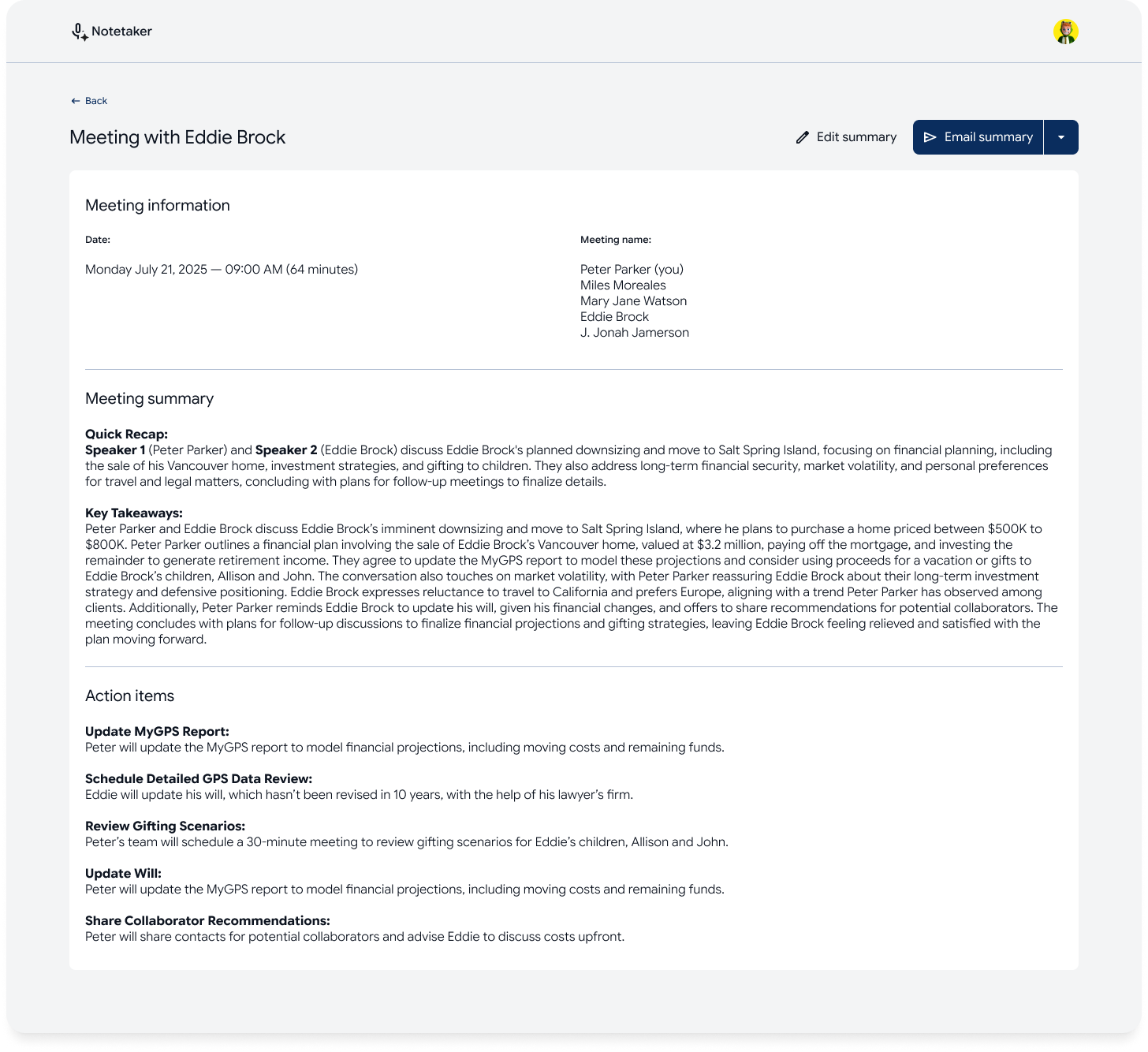
POC designs: start recording to view meeting summary
This stage moved fast, at least by design-cycle standards. The work was taking a design language built for online banking and stretching it to fit the newer interaction and UI patterns we're still figuring out around AI.
In a short time we were putting versions together and validating them with stakeholders. From there, the plan was to move to the next stage: putting it in front of a pilot group of 50 users.
Working on the notetaker POC was just one of the things I had to handle during that stretch. I also had to figure out where we wanted the product to go over time — and that's why we built our blueprint.
The blueprint mapped out the whole advisor experience across all these different tools, but from the angle of what the ideal version would look like inside Wealthie. So if an advisor has to prep for a meeting, book it, sit down with the client, capture what happened, and turn that into action items — what would that whole thing look like inside one app?
That's what I worked on with the Head of Design briefly until I had to take ownership in one of the best and most important projects of my life; my parental leave.
Inside that blueprint, meeting preparation specifically came down to three things:
First, I needed access to the important data on a client or household — the hard numbers, all pulled together, so I could actually draw conclusions from them. Almost like a Google Analytics view of your clients, their households, and their portfolios.
Second, I needed to know what actually mattered inside all that data — the insights, the alerts, the business opportunities. What to keep an eye on, or bring up when I sit down with the client.
And third, I needed to turn that into a meeting agenda — pull those important topics together so I could walk into the actual conversation with them, notetaker running.
That's where the blueprint closes the loop: I get myself briefed, I see what matters about a client or household, I build an agenda, and now I'm ready to have that conversation — recorded, and feeding straight back into the tools I already use, like Salesforce.
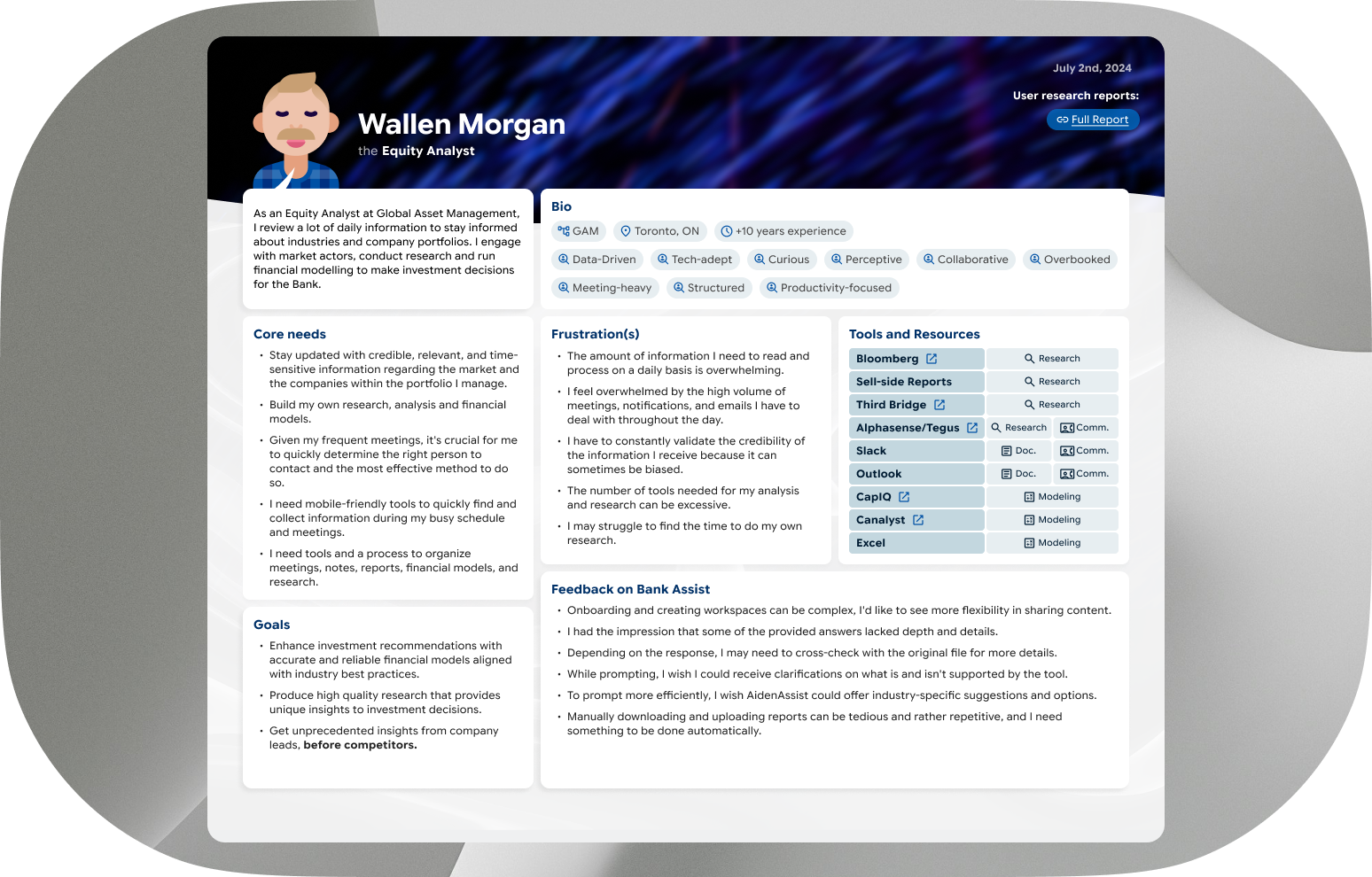
Persona 1: First wave of research conducted with GAM users in June 2024
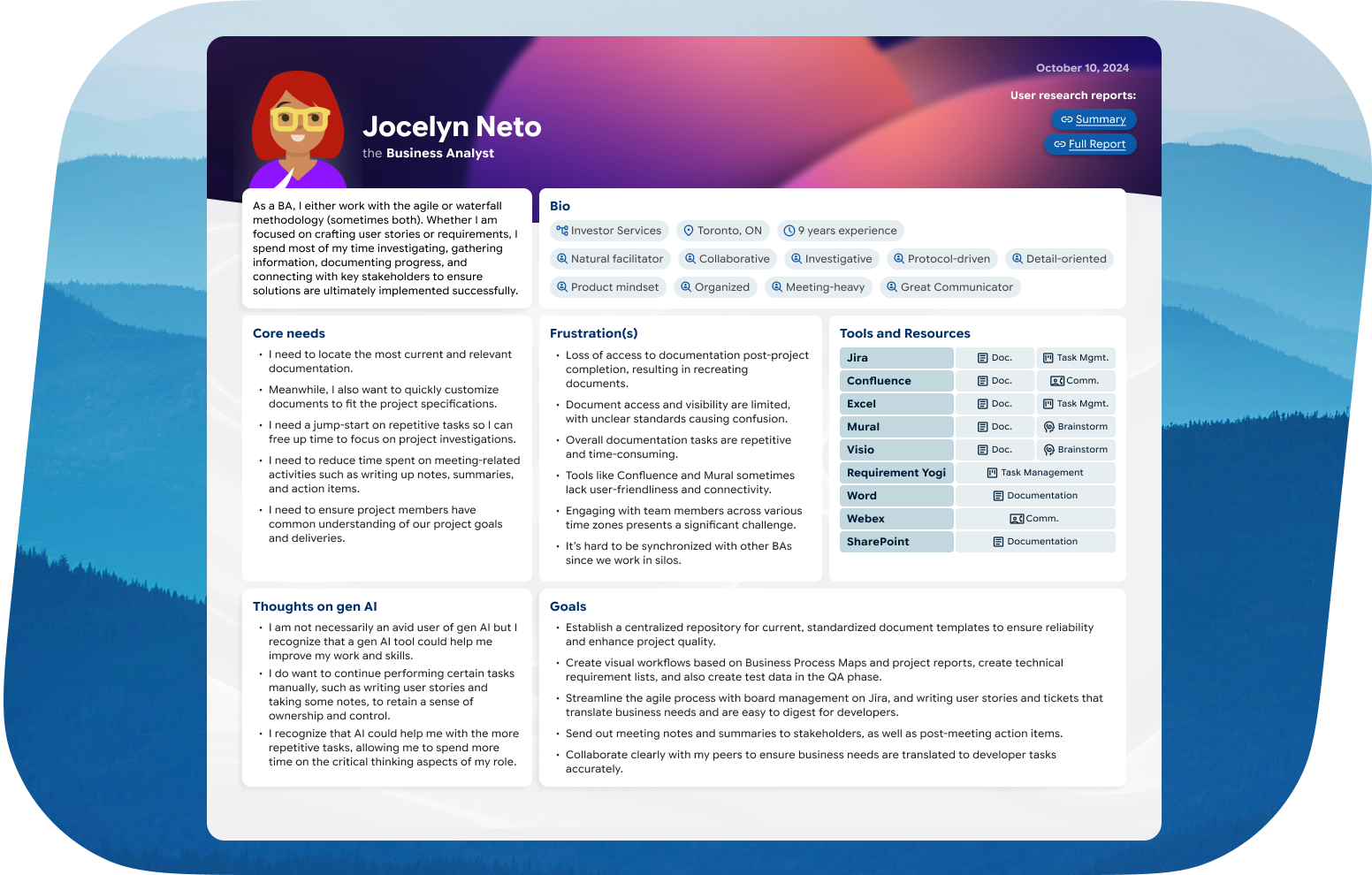
Persona 2: Profile of Business Analysts from the December 2024 research round
In 2023, RBC was still defining what enterprise AI experiences should look and feel like, outside of the work already happening within RBC Borealis. The RBC Interface Guidelines (RIG) gave us a strong foundation, but it wasn't designed for generative AI — there were no established patterns for AI-generated content, prompts, sources, or the higher information density these experiences required.
Rather than simply applying the existing system, I helped create a new layer of it. I developed AI-specific patterns and components while balancing the broader RBC ecosystem with the needs of an emerging product category. RBC Assist also required a more contemporary visual language: softer shapes, larger corner radii, simpler but more varied colour usage, and more flexible component proportions helped create hierarchy and distinguish AI interactions from the more rigid patterns of traditional enterprise software.
The product also had to scale beyond its desktop MVP to desktop, tablet, and mobile. I worked through responsive behaviours and component scaling to keep increasingly dense AI experiences usable across breakpoints, while preserving hierarchy, accessibility, and interaction affordances.
For me, this was less about creating a visual style and more about defining how a new type of product could behave within an established design ecosystem — balancing AI's emerging interaction patterns with accessibility, engineering constraints, scalability, and the need to move fast.
From 50 users to an enterprise capability
The product continued evolving through each sprint, research round, and feedback cycle.What started as a small experiment quickly became something lines of business wanted to adopt and extend for their own workflows.
50
1,500
10,000
20,000
40,000
As the product scaled, RBC Assist eventually evolved into a broader enterprise AI offering, including RBC Assist Pro and collaboration with an external partner.The version I helped design continued to serve thousands of users.

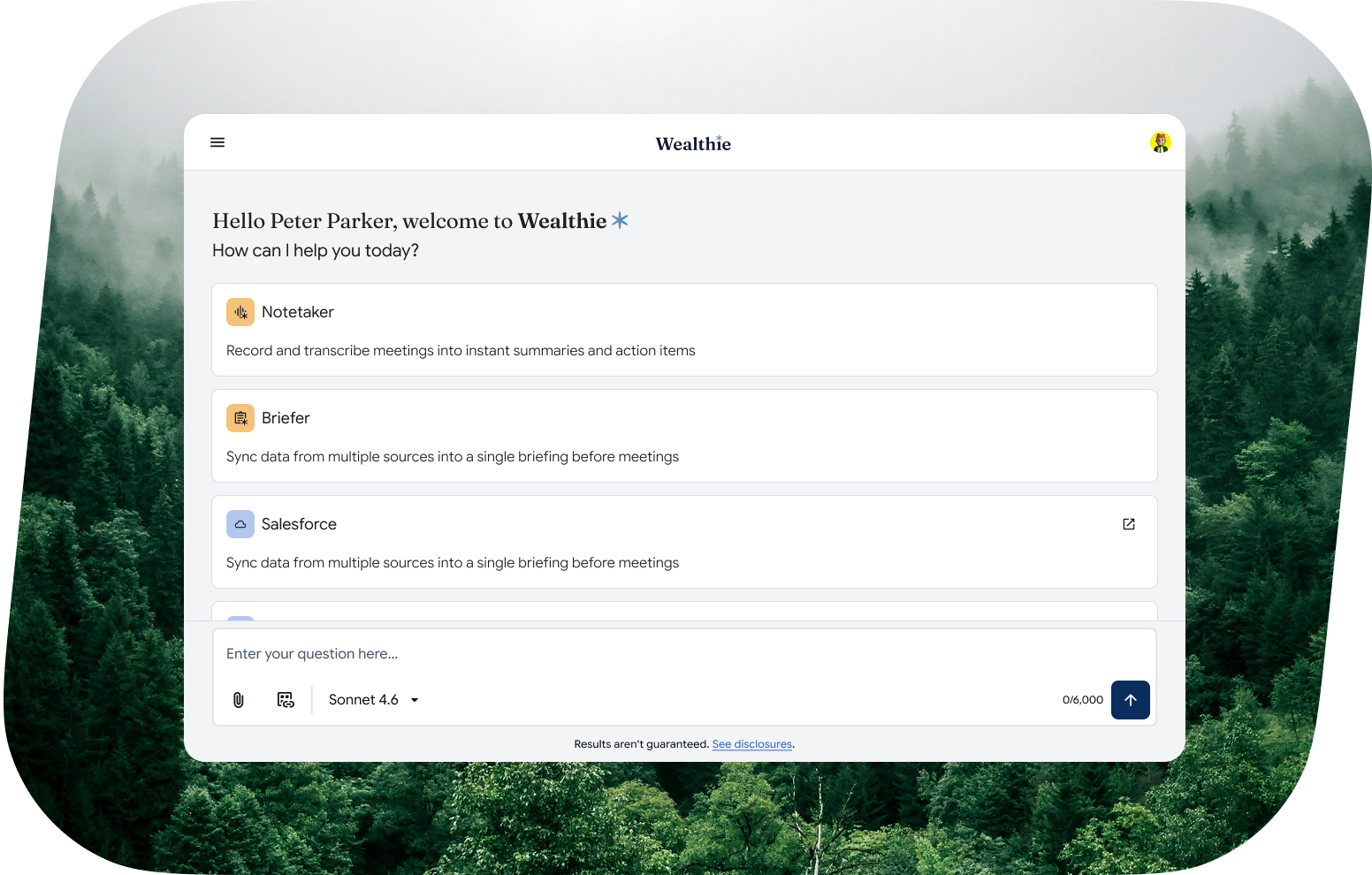
From MVP to latest version before release
01 — You can't design AI without understanding AI
As a Lead Product Designer, I couldn't simply focus on screens and interactions. I had to understand how the technology worked, where it could fail, and how those limitations affected the user experience.
That knowledge allowed me to become a better advocate for users in a highly technical and regulated environment.
02 — Constraints are a starting point, not the destination
The first version wasn't the experience we ultimately wanted to build.It didn't need to be.Starting with a constrained MVP gave us something tangible to learn from, build trust around, and evolve.
Good product design isn't always about getting to the ideal experience first. Sometimes it's about creating the conditions to get there.
03 — Design doesn't scale without collaboration
The product crossed teams, lines of business, disciplines, and levels of AI maturity. There were plenty of moments of friction.
The job wasn't to eliminate that friction. It was to create enough alignment for everyone to keep moving.
Looking back
RBC Assist was one of those projects where the technology, the product, and the design discipline were evolving at the same time. There was no established playbook for designing enterprise GenAI experiences.So we built one as we went.
And I'm proud that I got to help shape that experience from its 50-user MVP into a product used by thousands of people across RBC.